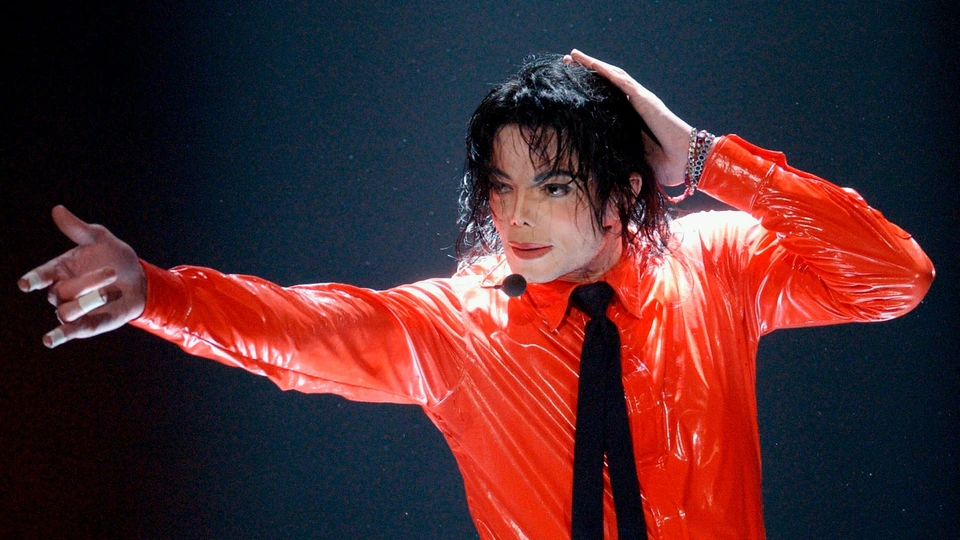

 He said almost nothing, the world never stopped listening

Michael Jackson’s enduring allure lies not in revelation, but in the mystery he never resolved
In communications strategy, there is a principle most public figures today are taught to fear: Silence. Silence is seen as dangerous. Visibility must be constant. Relevance must be fed daily. Algorithms reward exposure, confession, accessibility. The modern celebrity economy depends on perpetual disclosure - interviews, livestreams, personal revelations, emotional transparency packaged into content cycles that never pause.
And yet, in 2026, one of the most dominant figures on the internet remains a man who revealed almost nothing. Michael Jackson has now been dead for nearly two decades, but timelines remain saturated with him. Concert footage circulates endlessly. Rehearsal clips generate millions of views. Younger audiences dissect a glance, a vocal hiccup, a turn of the head as though decoding sacred material. New documentaries on Netflix emerge. Old interviews resurface. Every few months the world appears to rediscover him again. And yet none of it satisfies.
The more Michael Jackson content people consume, the more unfinished he seems.
As someone who works in strategic communications, and as a trained opera singer, I have increasingly come to believe that the reason for this obsession has less to do with nostalgia and more to do with something far more structural: Michael Jackson understood emotional suspension better than modern celebrity culture itself.
The most powerful Thing he ever created was incompleteness
Most public figures today are overexplained. We know what they eat, who they date, how they process heartbreak, what skincare they use, what political outrage currently occupies them. They exist in a state of permanent narration. The result is visibility without mythology.
Michael Jackson operated through the exact opposite principle. He gave the world fragments instead of access. A handful of major interviews across four decades. Long disappearances between albums. Public appearances so controlled and infrequent that they became global events. Strange imagery hovering permanently between vulnerability and theatre- Neverland, the masks on his children, the whisper-soft speaking voice, the surreal loneliness of his public existence.
He understood something the algorithmic age has almost entirely erased-- Audiences remain emotionally attached to what they cannot fully resolve.
Mystery creates participation.
People return repeatedly to incomplete figures because the mind continues trying to finish the narrative. Michael Jackson never allowed that completion. And, because he never resolved himself publicly, the culture never resolved him emotionally either.
Michael’s voice functioned like emotional strategy
This is where my background as a performer becomes impossible to separate from the argument. In opera, breathing is not accidental. Audible inhalations, suspended pauses, delayed phrasing - these are artistic tools. A singer uses breath not merely to support sound, but to create tension, anticipation, ache. Emotion often lives in the unresolved moment before release.
Michael Jackson used breath the same way. The gasps before lyrics. The sharp inhalations. The unfinished exhalations. The vocal stammers that seemed less sung than physically released from somewhere deeper. Popular culture often interpreted these as quirks or affectations. Musically, they functioned differently.
They suspended the listener emotionally.
His performances, including those breathtaking dance routines, rarely felt fully settled- it left the viewer in awe for those few seconds. There was always the sensation that something remained unresolved inside, which created a strange physical effect on audiences: you leaned toward him. Waiting. Anticipating. Remaining emotionally inside the performance even after it ended.
The same principle governed his public life.
Michael Jackson understood that withholding can be more powerful than disclosure because anticipation itself becomes addictive.
The Trial changed everything. and nothing
When the Martin Bashir documentary aired in 2003, Jackson appeared to make a catastrophic strategic miscalculation. He seemed to believe vulnerability would humanize him. Instead, it destabilized the mythology without replacing it with clarity.
The public had never truly known the private man before. We only knew symbols. Once the curtain briefly moved aside, audiences were left not with understanding, but with greater uncertainty. Then came the trial.
The acquittal in 2005 resolved the legal case. But culturally and psychologically, almost nothing resolved at all. We still do not know where performance ended and damage began. We still do not know how much of Michael Jackson was construction and how much was fracture. And perhaps that unresolved tension explains why the fascination remains so unusually intense. Not because people are still searching for facts. But because emotionally incomplete figures exert extraordinary long-term power over collective imagination
He escaped The algorithm before it could flatten him
Michael Jackson also disappeared at a historically precise moment -before social media transformed public life into permanent self-exposure. Had he lived another decade, the machinery of digital visibility would likely have demanded endless explanation. Livestreams. Clarifications. Podcasts. Daily access. The algorithm eventually reduces everyone into familiarity. But Jackson escaped before familiarity could fully consume him. He remains preserved in a pre-digital form of mythmaking where distance was still possible. That distance matters. Scarcity matters. Silence matters.
In today’s culture, public figures are rewarded for constant presence but increasingly punished with rapid emotional exhaustion. Audiences consume them quickly and move on just as quickly. Michael Jackson operates differently because he still feels psychologically unfinished. And unfinished narratives linger.
The world is still leaning forward
In opera, breath is used to prolong emotion beyond language itself. A singer can hold an audience captive in the space between two notes simply by delaying release. MJ built his public existence using the same instinct. The inhalations became style. The pauses became tension. The silences became mythology.
And perhaps that is why, even now, millions continue scrolling through clip after clip, documentary after documentary, searching for something that never fully arrives. Not information. Not even truth. Resolution.
But Michael Jackson’s genius (whether instinctive or deliberate) was that he never gave the audience emotional resolution. He kept the world suspended inside anticipation.
And the world, even now, is sitting on the edge of its seat.
Sunanda Rao-Erdem is a communications expert and a trained opera singer.
Share This: